Studio Notes: Photographing One Mug — Four Small Experiments in Light and Time
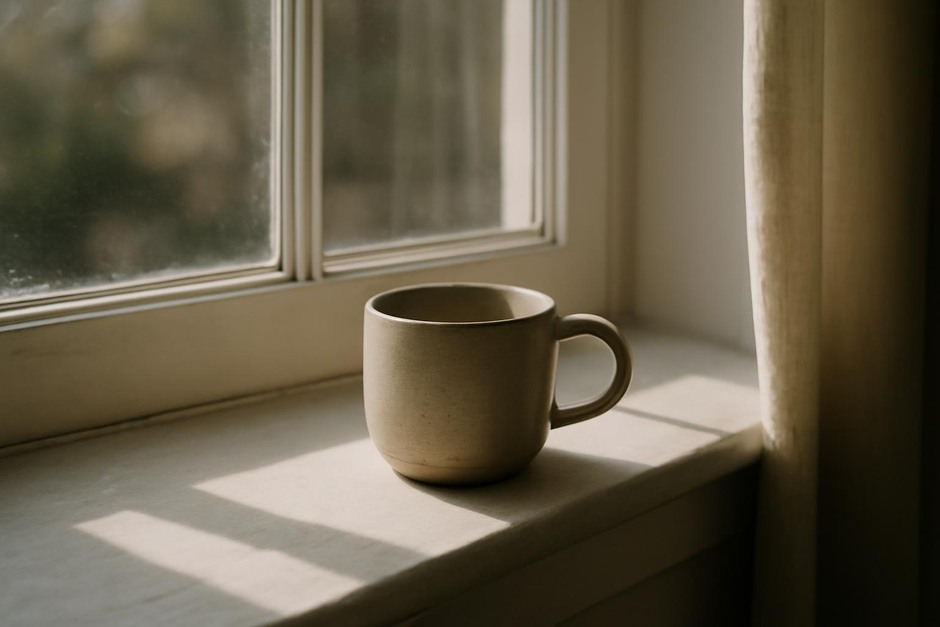
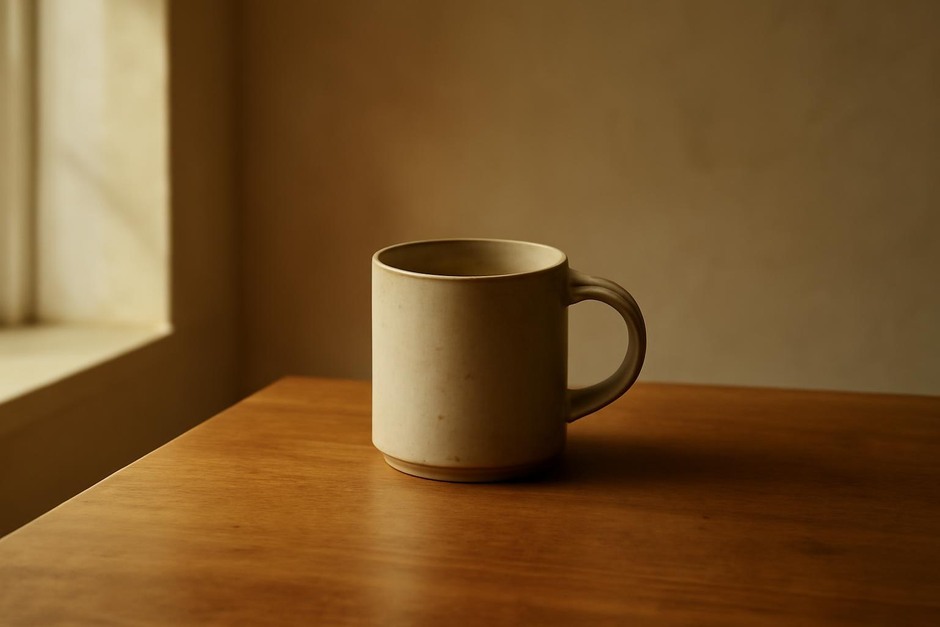
Opening observation: I found a chipped ceramic mug on the kitchen shelf and kept reaching for it every morning. It is neither perfect nor unusual, but its handle and glaze caught different light through the week. That felt like enough of a reason to slow down: how much can one ordinary object teach me if I photograph it the same way, four times, with a small change each day?
The question
Why focus on one thing? The question I set out with was simple: can a brief, repeated study of a single object sharpen how I see light, texture, and small compositional choices? I wanted to keep constraints tight so the observations would be clearer: same object, same corner of the table, same camera (or phone), and one deliberate variable for each image.
Setup and constraints
Constraints make the experiment useful. I put the mug on the east-facing table by the window, about a foot from the pane. Equipment: a 5-year-old mirrorless body (or a phone camera), a 35mm-equivalent lens, and a simple white dish towel to act as a backdrop when needed. Natural light only, no reflectors beyond a sheet of scrap paper, no artificial color gels. I used manual exposure when possible or tapped-and-locked exposure on the phone to keep exposures consistent.
My modest record-keeping note: time of day, direction of light (direct sun or diffuse), distance to window, and the single variable I intended to change. The point was not to make a perfect award-winning still life but to make small, repeatable choices and then look closely at the results.
The four small experiments (process)
Each day I made one deliberate change. Below are the four experiments and the thinking behind them.
1) Light angle: direct side light vs. front light
On day one I placed the mug so the sun hit it from the side, creating contrast between the lit lip and the shadowed handle. On day two I moved the mug to face the window so the light fell across its front. The side light emphasized texture; the front light flattened the glaze but revealed color. The lesson: angle affects perceived depth more than exposure alone.
2) Background: clutter vs. calm
One photograph kept a few breakfast items in the background—newspaper edges, a spoon—while the next used the white dish towel to isolate the mug. The cluttered frame suggested context and story; the calm frame allowed the eye to rest on form and surface. For teaching composition, removing distractions is a quick, dramatic control.
3) Scale and framing: negative space vs. close crop
I tried a wide frame that showed table surface and window sill, then a tight crop around the mug’s rim and handle. The wide shot invited atmosphere and place; the tight shot demanded attention to detail—nicks in the glaze, small imperfections. Changing scale alters the viewer’s expectation of narrative versus study.
4) Moment in time: stillness vs. small motion
Finally, I introduced a subtle motion: a hand reaching in, paused mid-movement, contrasted with a perfectly still composition. The small motion made the scene feel lived in and implied a before and after; stillness made it an object to be considered. Both approaches are valid—one is documentary, the other contemplative.
Review: what I noticed and what changed
After four frames I compared the images on the laptop, not to judge which was best but to list observations. Side light consistently revealed texture; clean backgrounds allowed the eye to linger; close crops forced attention to small details I usually ignore; introducing a human element changed the emotional register of the image more than any technical tweak.
Technically, my exposure variations were minor, but the perceived differences were substantial. The exercise reminded me that small, intentional constraints help clarify which decisions matter. It was less about mastering camera settings and more about learning to look for relationships between light, object, and space.
Practical takeaway: if you want to practice seeing, choose a small, ordinary subject and make four deliberate images using only one changing variable each time. Keep notes and return to the set a week later. You will spot subtleties you would otherwise miss.
Measured conclusion: This brief study felt both like a craft exercise and a gentle meditation. It cost little time and no special gear, but it trained a patient attention that carries over to larger projects. For anyone wanting a compact photographic practice that fits into everyday life, trying four small experiments with one object is an accessible and rewarding way to deepen how you look.